Conversations, Not Debates
I don’t know how we got here, but somehow the political arguments we avoid at dinner have come back to haunt our timelines on the web. Arguing on the internet is such a phenomenon that it’s had its fair share of the meme treatment. The feelings of frustration and futility are so familiar to us. In fact, whenever I see a Facebook post with a long thread of comments, I instantly think one of two things: “Oh, something important!” or “Why are these people yelling at each other?”
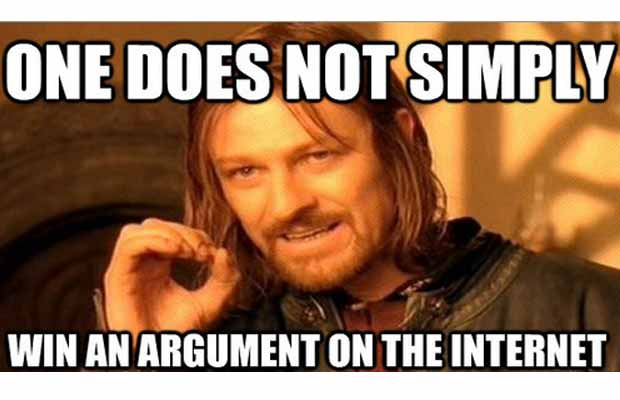
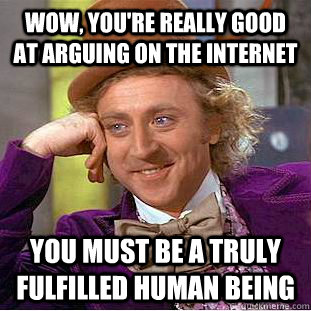
If you’re like me, you probably steer clear of these arguments. Every once in a while, though, you just can’t help but be dragged in. Sometimes, sometimes, they end up being productive — everyone is respectful, understands each other, and walks away learning something new. But most of the time, you end up with this latent sense of frustration that no progress was made. Why didn’t they listen? How could they think that way?
There are cases where debates can be really helpful, particularly when they’re well-structured. For example, in Oxford-style debates, there are two teams that take a “For” and “Against” position on a particular topic. They’re allowed seven minutes to make their case, then answer questions from the audience, and finally make a two-minute closing statement. This structure allows for people to make reasoned, well-crafted arguments on complex topics. As an audience, you get to learn about different sides of an issue that you may never have thought of before. And as a debater, you get to make your case without the usual quibbles and clever zingers that obscure the core issues.
(If you’d like to listen to some great debates, I’d recommend checking out the Intelligence Squared podcast)
Is there a better option for discourse?
Still, both well-structured debates and internet arguments share a common flaw: their goal is to win. And winning is about how many people agree with you, or how many likes you get. Now, some people believe “winning” an argument is the whole point. What’s better than saying something so smart and so clever that no one can offer a rebuttal, right? I understand the temptation — after all, it certainly feels good to “be right.”
Here’s a different perspective: instead of “being right,” get the other person to understand your point of view. Or better yet, don’t argue at all. Just try to understand each other. In many cases, you’ll learn something new, and at the very least you’ll gain insight into how another person thinks. That euphoric feeling of “winning” an argument won’t be there, but I guarantee you’ll gain more by having real conversations instead of arguments and debates.
This is easier said than done. Some people are so used to being competitive that they can’t just decide to stop, even if they really want to. Listening, understanding, empathizing — these are tremendously difficult to do right, even for people that are good at them. With the amount of division that exists in this day and age, though, I believe it’s important more than ever for us to figure out how we can understand each other as people.
Not everyone will be open to a conversation. That’s ok.
Depending on the context or the person, a conversation just won’t be possible. This typically boils down to intent. What does everyone want to achieve? Is everyone trying, in good faith, to understand each other, or is everyone trying to cut each other down? If someone is more interested in embarrassing you or making themselves look smart, then there isn’t much hope for a real conversation. In those situations, a good option is to just listen. Often times, those resistant to discourse are looking for someone to hear them out.
It’s worth pointing out that our social platforms aren’t designed for conversations. It’s incredibly easy for Facebook posts to sprawl into arguments. Twitter was basically built for us to talk to people who already agree with us (it’s in the brand — “birds of a feather”). Unfortunately, the behaviors we learn online tend to follow us in real life. It’s not surprising that the rise of partisan, antagonistic behaviors was accompanied by the rise of social media.
At the moment, the best we can do is try. Every little bit of progress helps, and with some work, we could see some change here. It’s going to take a lot of time and effort, but I truly hope that we can start to bring more civil discourse not only on the web, but in everyday life as well.