Historians will HATE Encryption
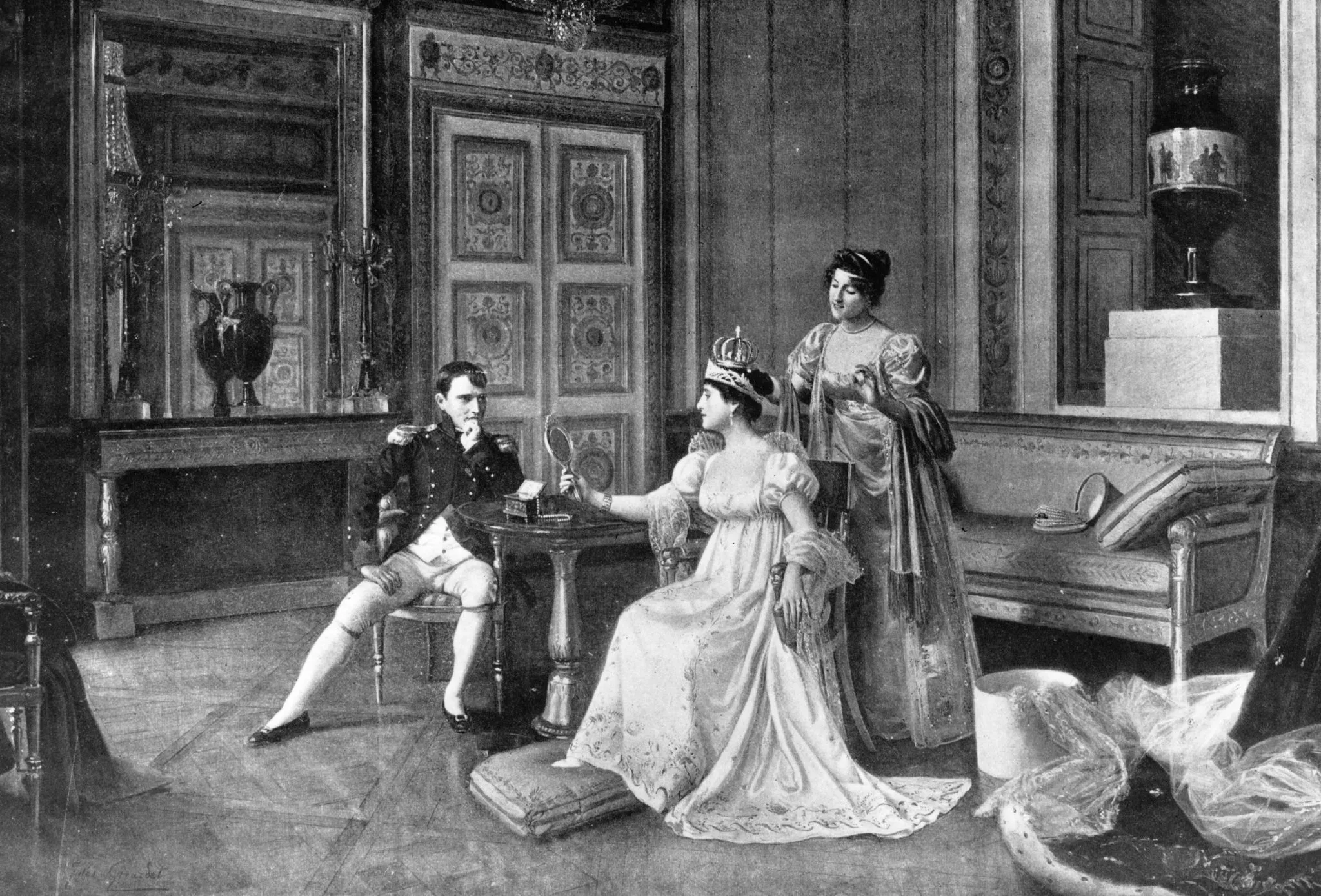
So much of our understanding of history is from analyzing deeply personal artifacts. My favorite is Napoleon’s famous love letters to Josephine - incredibly humanizing and entertaining:
“Soon, I hope, I will be holding you in my arms; then I will cover you with a million hot kisses, burning like the equator.”
— Napoleon Bonaparte1
But I have to wonder… did Napoleon ever intend for us to read this? This is clearly private! I can’t imagine any present day leader wanting their “love letters” to be made public in any fashion.
And yet, all information on how we live is still so valuable for future generations, and much of it is either behind walled gardens or encrypted. None of it can be accessed by historians.
What do we do about this?
Future historians may have to fund “digital excavations”, where they dedicate compute resources to either brute force weaker encryption or to find vulnerabilities that were weren’t aware of. This feels similar to archeological excavations we do today, and might be tractable in the future when compute is perhaps cheaper and more available.
Fundamentally, there’s a tension between what we want (privacy within our lifetime and perhaps a few generations) and what future civilizations want (unfettered access to the past). I wonder if it’s possible to design encryption such that both needs are assuaged.
Timed-release Encryption
For example, we know that encryption “weakens over time” since compute resources presumably increase over time. Can this “encryption strength decay” be a feature and not a bug, for sufficiently long time scales?
Rivest, Shamir, and Wagner (RSW) proposed time-lock puzzles. Basically, if we can design a private key that requires a minimum number of computations to guess, then we can squint and say “X computations will take 40 years of computing, so that’s how long this document can stay encrypted”.
More recently, tlock seems like a nice evolution that’s batteries-included and ready to use. I don’t understand the nuances of drand threshold networks very well, but I’d be curious if they can handle the scale of companies like Meta, Google, Apple, etc. Although it’s worth noting that Cloudflare has an way to use tlock through Workers if you’d like to give it a whirl yourself, or just try timelock.dev.
Can we hill climb our way to QUANTUM?
In some sense, much of this worrying is obviated by quantum computing, that seems to be getting better every day. It’s in this light I find OpenAI’s recent math advances interesting. It’s true that quantum computing isn’t as verifiable as math, but clearly some aspects are as shown by OpenAI’s Astra.
When that pops open, I’m very curious what will be the “letters to Josephine” for future generations.